Source agricultural irrigation tee fitting for Lawn, Farm, and Field
Find 30 agricultural irrigation tee fitting options for lawn, agricultural production, and water pipe systems. Compare models like QCIT-016 and LTL16 with ISO9001 certification and various connection types from Fujian suppliers.
Key considerations
Products List




Comprehensive Sourcing Guide
Strategic Sourcing Guide for Agricultural Irrigation Tee Fittings
Navigating the global market for agricultural irrigation components requires a precise understanding of technical specifications, material integrity, and supply chain reliability. The agricultural tee fitting, a critical connector in drip irrigation systems, serves as the backbone for distributing water, fertilizers, and disinfectants across vast farming operations. For procurement professionals, sourcing these components involves more than selecting a price point; it demands a rigorous evaluation of compatibility with existing infrastructure, adherence to international standards, and the verification of supplier capabilities. This guide synthesizes observed market data and technical requirements to provide a structured approach for acquiring high-quality irrigation tees.
Technical Specifications and Material Compatibility
The foundation of a successful procurement strategy lies in the detailed analysis of technical specifications. Agricultural irrigation tees are not generic connectors; they are engineered to specific diameters, pressure ratings, and material compositions. Market observations indicate that the most common diameter for these fittings is 12mm, often denoted as Dn12. This specific sizing is crucial for compatibility with standard drip tapes and polyethylene pipes used in modern agricultural production. Buyers must verify that the selected fitting matches the internal and external dimensions of their piping system to prevent leaks or flow restrictions.
Material selection is equally critical. The observed data highlights a prevalence of plastic-based fittings, specifically Polypropylene (PP) and other high-density polymers. These materials are chosen for their resistance to corrosion, chemical degradation from fertilizers, and UV exposure in outdoor environments. The manufacturing process often involves casting or specific molding techniques to ensure structural integrity. For instance, some fittings feature a reducing shape, designed to connect pipes of different diameters, while others maintain an equal shape for uniform flow distribution. The surface treatment of these components can vary; some are polished for smooth flow, while others undergo phosphide treatment to enhance durability. Buyers should explicitly request material data sheets to confirm the resin grade and ensure it meets the chemical resistance requirements of their specific irrigation solution, particularly when using harsh fertilizers or disinfectants.
Compliance, Certification, and Standard Verification
In the B2B agricultural sector, compliance is not merely a formality but a prerequisite for system longevity and safety. The supply chain for irrigation fittings is heavily influenced by international quality management standards. A high-confidence fact observed in the market is the presence of ISO9001 certification among suppliers. This certification indicates that the manufacturer adheres to a standardized quality management system, which is essential for maintaining consistent product quality across large production runs. However, buyers must look beyond the mere claim of certification. It is necessary to verify the specific version of the standard, as older versions like ISO9001:2006 may differ in rigor from current iterations.
Furthermore, dimensional and functional standards play a pivotal role in ensuring interchangeability. The market data references a diverse set of standards including GB (Guobiao), DIN (Deutsches Institut für Normung), ANSI (American National Standards Institute), and JIS (Japanese Industrial Standards). This variety underscores the importance of aligning the product with the specific regulatory environment of the target market. For example, a fitting designed to meet DIN standards may not be directly compatible with a system built to ANSI specifications without adapters. Buyers should request documentation proving that the product dimensions, thread distributions, and pressure ratings align with the relevant standard for their region. Additionally, while some background information mentions CE or ISO 9001:2015, these should be treated as potential attributes to verify rather than guaranteed facts. The procurement process must include a checklist to confirm that the supplier's current production batch holds valid, up-to-date certification for the specific standards required by the buyer's project specifications.
Cost Drivers and Economic Factors
Understanding the cost structure of agricultural irrigation fittings is essential for budgeting and negotiation. The observed price range in the market spans from $0.01 to $6.26 USD per unit. This wide variance is driven by several factors, including the complexity of the design, the material grade, and the volume of the order. A fitting with a simple equal shape and standard plastic composition will naturally cost less than a complex reducing elbow with specialized surface treatments or custom branding.
The Minimum Order Quantity (MOQ) is another significant economic driver. Market data indicates an MOQ range of 75 to 50,000 units. This disparity suggests that suppliers cater to both small-scale agricultural pilots and large-scale industrial distributors. For buyers with limited capital or testing needs, finding a supplier with a lower MOQ is critical to avoid excessive inventory costs. Conversely, large-scale procurement can leverage economies of scale, potentially lowering the unit cost significantly. However, buyers must balance the lower unit price against the increased capital tied up in inventory and the logistics of storing large quantities.
Packaging and shipping costs also influence the total landed cost. Observed packaging data reveals that fittings are typically packed in cartons with specific dimensions, such as 54x35x28 cm. The weight per carton is a vital metric for freight calculations; for instance, a carton weight of 11 kg to 14 kg affects the shipping volume and weight charges. Buyers should calculate the cost per cubic meter (CBM) rather than just the unit price to get an accurate picture of the total expense. Additionally, lead times, observed to range from 5 to 10 days for some suppliers, impact cash flow and project scheduling. Shorter lead times may come at a premium, while longer lead times require earlier planning and potentially higher safety stock levels.
Typical Applications and Functional Requirements
Agricultural irrigation tees are designed for specific functional roles within the broader irrigation ecosystem. The primary application is connecting drip pipes to distribute water efficiently across crops. These fittings are integral to systems used for irrigation, fertilization, and disinfection, allowing for the injection of chemicals directly into the water stream. The functional requirement of "connecting drip tape" is a common specification, indicating that the fitting must securely interface with flexible polyethylene tubing.
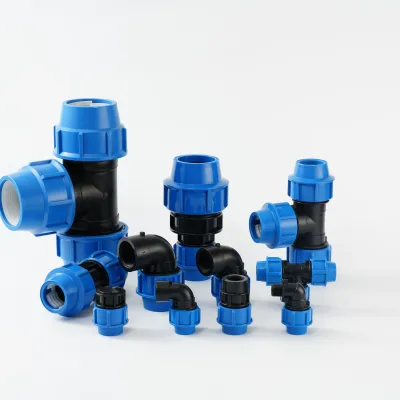
The application scene is predominantly agricultural production, including lawn maintenance and large-scale crop farming. The design often incorporates features like clamping installation types, which allow for quick and secure attachment to the pipe without the need for complex tools. Some fittings feature external thread distributions, facilitating connection to valves or other threaded components. The color of the fitting, often observed as blue or black, can serve as a visual indicator of the material type or pressure rating, aiding in system maintenance and identification.
Furthermore, the power source for the system is pressure-driven, meaning the fitting must withstand the hydraulic pressure of the water flow without deforming or leaking. This is particularly important in systems where water is pumped over long distances or elevated terrain. Buyers should ensure that the selected tee fitting is rated for the maximum operating pressure of their specific irrigation setup. The feature of "saving water" is a key value proposition, implying that the design minimizes leakage and ensures uniform distribution, which is critical for water conservation in arid regions.
Supplier Evaluation and Quality Control
Selecting the right supplier is as important as selecting the right product. The origin of the products is a key indicator of supply chain logistics. Observed data points to Fujian and Fuzhou, China, as primary manufacturing hubs for these fittings. While these regions are known for their manufacturing capabilities, buyers must conduct due diligence to ensure the supplier has the capacity to meet demand. Factors to evaluate include the supplier's production capacity, their history of on-time delivery, and their responsiveness to quality issues.
Quality control measures should be a central part of the supplier evaluation process. Buyers should inquire about the supplier's internal quality assurance protocols, including in-process inspections and final product testing. The observed "polish" and "phosphide" surface treatments suggest that surface finish is a controlled attribute. Buyers should request samples to verify the quality of these finishes and check for defects such as burrs, cracks, or inconsistent coloring. Additionally, the warranty period, observed to be up to 5 years for some products, is a strong indicator of the manufacturer's confidence in their product. However, buyers must clarify the terms of the warranty, including what constitutes a defect and the process for claims.
It is also vital to verify the supplier's ability to handle customization. The market data indicates that customization is available, with options for specific models like QCIT-016, QCIT-020, and LTL16. Buyers should assess the supplier's flexibility in accommodating custom orders, including changes to dimensions, colors, or packaging. The ability to produce custom models can be a significant advantage for projects with unique requirements.
Long-Term Procurement Considerations
Sourcing agricultural irrigation fittings is a long-term commitment that impacts the efficiency and sustainability of farming operations. Buyers should consider the lifecycle of the product, including its durability and resistance to environmental factors. The 5-year warranty observed in the market suggests that high-quality fittings are designed for long-term use, but this depends heavily on the installation environment. Buyers should evaluate the supplier's track record for product longevity and their support for after-sales service.
Sustainability is another growing consideration. The "saving water" feature aligns with global efforts to reduce agricultural water usage. Buyers should prioritize suppliers who demonstrate a commitment to sustainable manufacturing practices and who offer products that maximize water efficiency. Additionally, the standardization of components, such as the 54x35x28 cm carton size, facilitates efficient logistics and storage, reducing waste and improving supply chain resilience.
Finally, buyers should maintain a diversified supplier base to mitigate risks. Relying on a single source for critical components like irrigation tees can be risky if that supplier faces production delays or quality issues. By establishing relationships with multiple suppliers who meet the required specifications and standards, buyers can ensure continuity of supply and maintain competitive pricing. Regular audits and performance reviews of suppliers will help maintain high standards and foster a reliable supply chain for agricultural irrigation needs.
FAQs
What diameter is standard for agricultural irrigation tee fittings?
The standard diameter for these fittings is 12mm, often denoted as Dn12. This specific sizing ensures compatibility with standard drip tapes and polyethylene pipes used in modern agricultural production systems.
Which materials are commonly used for these irrigation fittings?
These fittings are typically made from plastic, specifically Polypropylene (PP). These materials are selected for their resistance to corrosion, chemical degradation from fertilizers, and UV exposure in outdoor environments.
Can buyers find suppliers with ISO9001 certification for these products?
Yes, high-confidence facts indicate that suppliers often hold ISO9001 certification. This certification confirms adherence to a standardized quality management system, which is essential for maintaining consistent product quality across large production runs.
What is the typical lead time for ordering these irrigation components?
The observed lead time for these products ranges from 5 to 10 days. Buyers should note that shorter lead times may impact cash flow and project scheduling compared to longer production cycles.
How are these fittings typically packaged for shipping?
Fittings are usually packed in cartons with dimensions of 54x35x28 cm. The weight per carton varies between 11 kg and 14 kg, which is a vital metric for calculating freight costs.
What is the warranty period for these agricultural irrigation tees?
Some products in the market offer a warranty period of up to 5 years. This duration indicates the manufacturer's confidence in the product's durability and resistance to environmental factors over time.
Which locations are primary manufacturing hubs for these fittings?
Primary manufacturing hubs for these fittings are located in Fujian and Fuzhou, China. Buyers should consider these origins when evaluating supply chain logistics and potential shipping costs.